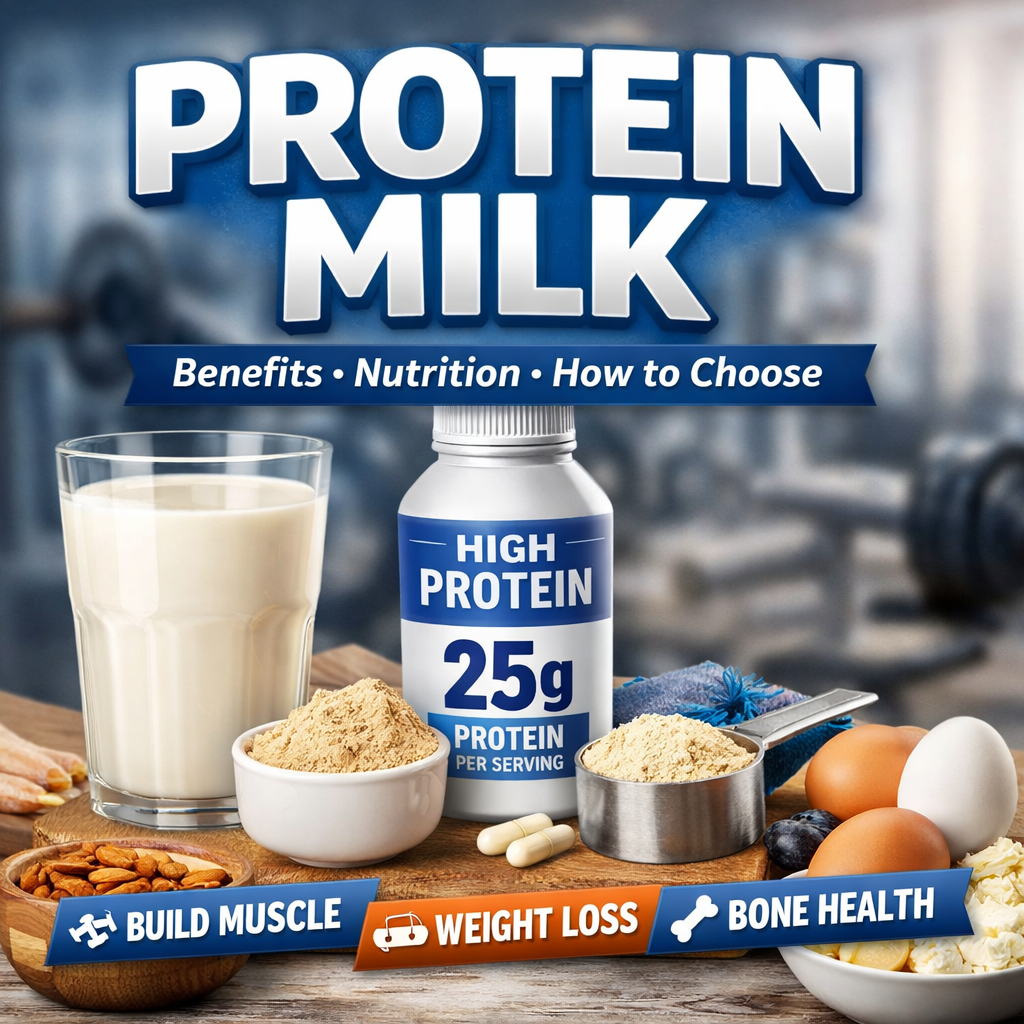
Protein Milk: The Complete Guide to Benefits, Uses, and How to Choose the Best One
Protein milk has quickly become one of the most popular functional beverages in the fitness and wellness world. From gym beginners to professional athletes, many people now prefer protein-enriched milk as a convenient way to meet their daily protein requirements. But what exactly is protein milk, how does it work, and is it really better than regular milk?
In this detailed guide, we will break down everything you need to know about protein milk — its benefits, nutritional profile, who should use it, how to choose the right type, and common mistakes people make when consuming it.
What Is Protein Milk?
Protein milk is regular milk that has been fortified with additional protein, usually in the form of whey protein, milk protein concentrate, or casein. While normal cow’s milk already contains protein (about 8 grams per cup), protein milk typically provides anywhere from 12 to 25 grams of protein per serving.
The goal of protein milk is simple: deliver high-quality protein in an easy-to-consume liquid form that fits naturally into daily meals, workouts, and recovery routines.
How Protein Milk Is Different from Regular Milk
- Higher protein content: Standard milk contains about 8g protein per cup, while protein milk can provide 15–25g.
- Lower sugar in some variants: Many protein milk brands reduce lactose or added sugar.
- Designed for fitness goals: Protein milk targets muscle recovery, strength building, and satiety.
- Often fortified: Additional calcium, vitamin D, and sometimes B12 are added.
Nutritional Profile of Protein Milk
Although exact values depend on the brand, a typical serving of protein milk provides:
- Calories: 120–180 kcal
- Protein: 15–25 grams
- Carbohydrates: 6–12 grams
- Fat: 0–6 grams (depending on skim, low-fat, or full cream)
- Calcium: 25–35% of daily requirement
- Vitamin D and B12
This balanced profile makes protein milk suitable for both muscle building and weight management.
Benefits of Protein Milk
1. Supports Muscle Growth and Recovery
Protein milk delivers complete proteins that contain all essential amino acids. Whey and casein are particularly effective for stimulating muscle protein synthesis, making protein milk ideal after workouts.
2. Convenient Daily Protein Source
Not everyone enjoys protein shakes or powders. Protein milk offers a ready-to-drink alternative that fits easily into breakfast, snacks, or post-workout meals.
3. Helps with Weight Management
Protein increases satiety, which helps reduce overeating. Consuming protein milk between meals can control hunger and support fat loss goals.
4. Improves Bone Health
With high calcium and vitamin D, protein milk supports strong bones and reduces the risk of osteoporosis, especially in adults over 30.
5. Suitable for Active and Aging Populations
Protein milk is helpful for athletes, gym-goers, older adults, and anyone with higher protein needs.
Who Should Drink Protein Milk?
Protein milk is not only for bodybuilders. It is useful for:
- Gym beginners and regular trainees
- Athletes and sports players
- People trying to lose fat
- Vegetarians needing extra protein
- Older adults with muscle loss
- Busy professionals with limited meal time
However, people with lactose intolerance or milk allergies should choose lactose-free or plant-based alternatives.
Protein Milk vs Protein Shake
| Feature | Protein Milk | Protein Shake |
|---|---|---|
| Form | Ready-to-drink milk | Powder mixed with liquid |
| Protein Source | Natural milk + added protein | Isolated whey, casein, or plant protein |
| Convenience | High | Moderate |
| Customization | Limited | High |
If you want simplicity and taste, protein milk works well. If you need precise macros, protein shakes are better.
Best Time to Drink Protein Milk
- Post-workout: Speeds up muscle recovery.
- Breakfast: Increases protein intake early in the day.
- Between meals: Controls hunger and cravings.
- Before bed: Casein-rich protein milk supports overnight recovery.
How to Choose the Best Protein Milk
Do not buy blindly. Check these factors:
1. Protein Content
Look for at least 15g protein per serving.
2. Sugar Level
Avoid products with more than 10g added sugar.
3. Protein Type
- Whey: Fast digestion, ideal post-workout
- Casein: Slow digestion, good before sleep
- Milk protein blend: Balanced option
4. Fat Content
Choose skim or low-fat if fat loss is your goal.
5. Lactose-Free Option
Important for people with lactose sensitivity.
Common Myths About Protein Milk
Myth 1: Protein Milk Is Only for Bodybuilders
False. Anyone with higher protein needs can benefit.
Myth 2: Too Much Protein Harms Kidneys
In healthy individuals, moderate protein intake is safe.
Myth 3: Protein Milk Causes Fat Gain
Weight gain depends on total calories, not protein milk alone.
Potential Side Effects
- Bloating in lactose-intolerant people
- Digestive discomfort if consumed in excess
- Allergic reactions in milk allergy cases
Always introduce protein milk gradually and monitor your digestion.
How Much Protein Milk Should You Drink?
General guideline:
- Sedentary adults: 1 serving per day
- Active individuals: 1–2 servings per day
- Athletes: As per protein requirement (1.6–2.2 g/kg body weight)
Do not rely only on protein milk. Whole foods should remain the main protein source.
Homemade Protein Milk Option
You can prepare simple protein milk at home:
- 250 ml low-fat milk
- 1 scoop whey protein
- Optional: cinnamon or cocoa powder
This gives you control over ingredients and sugar content.
Is Protein Milk Worth It?
Protein milk is not a magic drink. It is a convenient tool to help you meet protein needs. If your diet already meets protein requirements, you may not need it. But for busy individuals, gym-goers, and people struggling with protein intake, protein milk is a practical and effective option.
Final Verdict
Protein milk is a useful, safe, and efficient way to increase daily protein intake. It supports muscle recovery, weight management, and bone health when used correctly. The key is choosing a quality product, controlling sugar intake, and integrating it into a balanced diet.
If you use protein milk strategically, it can significantly improve your nutrition and fitness results.