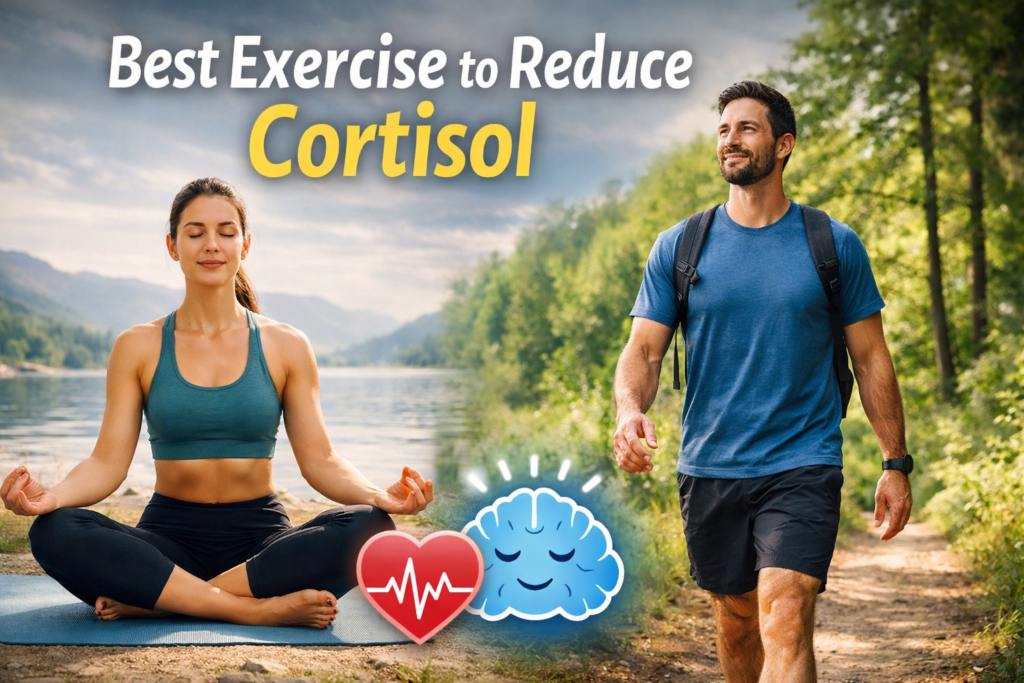
Best Exercise to Reduce Cortisol: Science-Backed Ways to Calm Stress Naturally
Chronic stress is no longer just a mental health issue — it is a full-body problem. At the center of it sits one powerful hormone: cortisol. While cortisol is essential for survival, constantly elevated levels quietly destroy sleep quality, fat loss, muscle recovery, immunity, and long-term health.
If you are serious about controlling stress naturally, the question is not “should I exercise?” — it is what is the best exercise to reduce cortisol without making it worse?
This guide breaks down exactly which exercises lower cortisol, which ones raise it, and how to structure your workouts to calm your nervous system instead of overloading it.
What Is Cortisol and Why Does It Matter?
Cortisol is your body’s primary stress hormone. It is released by the adrenal glands in response to physical or psychological stress.
In small, short bursts, cortisol is useful. It:
- Raises blood sugar for quick energy
- Improves alertness and reaction time
- Supports inflammation control
The problem starts when cortisol stays elevated for weeks or months.
Chronically high cortisol is linked to:
- Belly fat gain
- Poor sleep
- Weakened immunity
- Low testosterone and estrogen imbalance
- Brain fog and anxiety
- Slow recovery from workouts
Exercise can either lower cortisol or push it even higher. The difference depends entirely on intensity, duration, and recovery.
The Best Exercise to Reduce Cortisol (Backed by Research)
Not all workouts are created equal when it comes to stress hormones. Below are the most effective forms of exercise proven to reduce cortisol and calm the nervous system.
1. Walking (Especially in Nature)
Walking is the most underrated cortisol-lowering exercise on the planet.
Research consistently shows that low-intensity aerobic movement lowers cortisol, improves mood, and activates the parasympathetic (“rest and digest”) nervous system.
Why walking works:
- Does not spike stress hormones
- Improves blood flow to the brain
- Enhances serotonin and dopamine
- Improves sleep quality
Best protocol:
- 20–45 minutes
- Easy pace (you can talk while walking)
- Preferably outdoors or in sunlight
Daily walking alone can significantly lower baseline cortisol levels.
2. Yoga (Especially Slow and Restorative Styles)
Yoga is one of the most scientifically validated tools for cortisol reduction.
Studies show that regular yoga practice reduces cortisol, anxiety, and inflammatory markers while improving heart rate variability (a key indicator of nervous system balance).
Best styles for cortisol control:
- Hatha yoga
- Yin yoga
- Restorative yoga
- Slow flow vinyasa
Why yoga works:
- Activates the vagus nerve
- Combines movement with breathing
- Down-regulates the stress response
Just 20–40 minutes of yoga can measurably reduce cortisol the same day.
3. Light Resistance Training
Strength training is a double-edged sword.
Heavy, high-volume lifting spikes cortisol sharply. But moderate, controlled resistance training improves insulin sensitivity and lowers baseline cortisol over time.
How to lift without raising cortisol:
- Use moderate weights (60–75% of max)
- Limit sessions to 30–50 minutes
- Rest 60–120 seconds between sets
- Avoid training to failure every workout
Best formats:
- Full-body workouts
- Upper/lower splits
- Machine-based training for recovery days
When done correctly, strength training stabilizes cortisol rather than spiking it chronically.
4. Swimming
Swimming combines low-impact cardio with rhythmic breathing — a powerful cortisol-lowering combination.
Why swimming works:
- Cold or cool water activates the parasympathetic nervous system
- Breathing control reduces anxiety signals
- Minimal joint stress = lower physiological load
Best protocol:
- 15–30 minutes
- Steady, relaxed pace
- Focus on slow exhalation
5. Pilates
Pilates is highly effective for stress reduction because it emphasizes posture, controlled breathing, and slow movement.
Benefits:
- Improves core stability
- Reduces muscular tension
- Activates parasympathetic tone
Two to three Pilates sessions per week can significantly lower stress markers.
Exercises That Increase Cortisol (If Overdone)
If your goal is cortisol reduction, these workouts need to be carefully controlled or temporarily avoided.
1. HIIT (High-Intensity Interval Training)
HIIT spikes cortisol aggressively. It is useful for fat loss and conditioning but disastrous for people already under chronic stress.
Limit to:
- 1–2 sessions per week max
- Under 20 minutes total
2. Long-Duration Cardio
Running or cycling for 60–90 minutes continuously elevates cortisol, especially in calorie deficits.
3. High-Volume Bodybuilding
Excessive sets, short rest periods, and daily lifting overload the adrenal system.
The Ideal Weekly Workout Plan to Lower Cortisol
If cortisol reduction is your priority, this structure works extremely well:
- Daily: 20–45 min walking
- 2–3x/week: Yoga or Pilates
- 2–3x/week: Light-to-moderate strength training
- 1x/week (optional): Short HIIT or sports
This combination balances movement, muscle maintenance, and nervous system recovery.
Other Critical Factors That Affect Cortisol
Exercise alone will not fix cortisol if these basics are ignored.
1. Sleep
Less than 7 hours of sleep automatically raises cortisol the next day.
2. Calories
Severe calorie restriction spikes cortisol dramatically.
3. Caffeine Timing
Drinking coffee late in the day elevates nighttime cortisol.
4. Breathing Practices
Slow nasal breathing and long exhalations reduce cortisol within minutes.
Frequently Asked Questions
What is the single best exercise to reduce cortisol?
Walking combined with yoga is the most reliable cortisol-lowering combination.
Does exercise always increase cortisol?
No. Low-intensity and moderate-intensity exercise reduces baseline cortisol over time.
How fast can cortisol drop?
Acute reductions can happen within 20–40 minutes of calming exercise.
Final Verdict
The best exercise to reduce cortisol is not brutal workouts — it is intelligent movement.
Top cortisol-lowering exercises:
- Walking
- Yoga
- Pilates
- Swimming
- Moderate strength training
If your training leaves you exhausted, wired at night, or anxious, your cortisol is likely too high.
Train to calm your nervous system first. Performance, fat loss, and health will follow naturally.