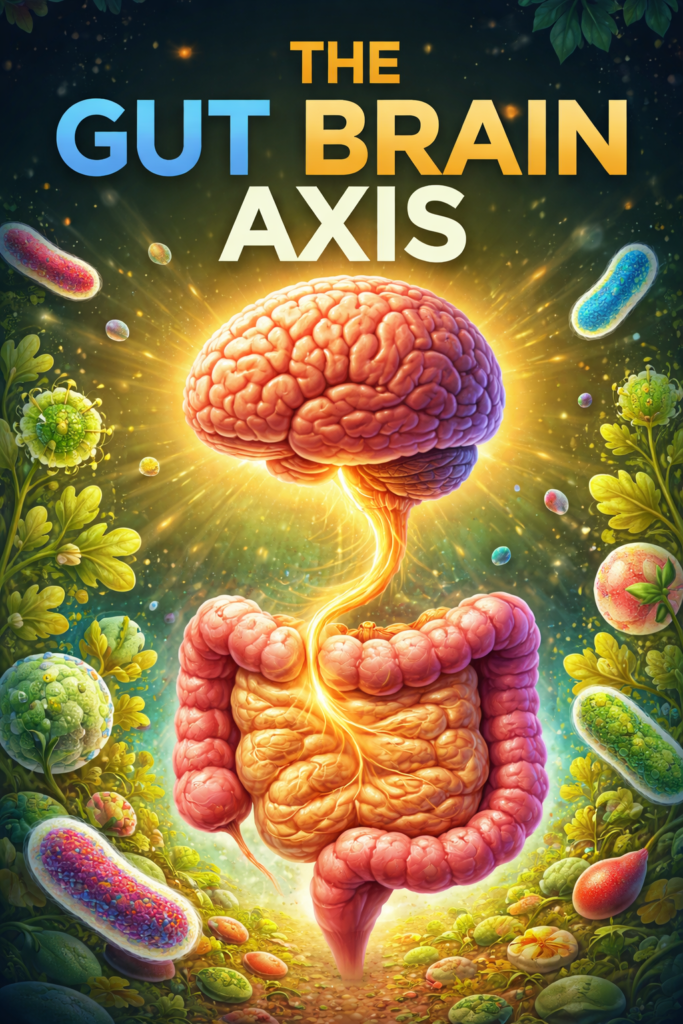
The Gut Brain Axis: How Your Digestive System Controls Your Mind, Mood, and Health
The connection between your gut and your brain is not a wellness myth or trendy buzzword. It is a real, scientifically proven communication network known as the gut brain axis. This bidirectional system links your digestive tract with your central nervous system and plays a critical role in mental health, immunity, metabolism, and even behavior.
If you think digestion is only about food breakdown and nutrient absorption, you are missing the bigger picture. Your gut is constantly sending chemical, hormonal, and neural signals to your brain — and your brain is responding in return.
Understanding the gut brain axis is not optional anymore. It is foundational to modern health.
What Is the Gut Brain Axis?
The gut brain axis refers to the complex two-way communication system between the gastrointestinal tract and the brain. This network connects:
- The central nervous system (brain and spinal cord)
- The enteric nervous system (the “second brain” in your gut)
- The vagus nerve
- The immune system
- The gut microbiome (trillions of bacteria in your intestines)
Your gut has its own independent nervous system with over 100 million neurons — more than the spinal cord. That alone should destroy the idea that the gut is just a food tube.
This system allows your gut to influence how you think, feel, react to stress, and even how you sleep.
Why the Gut Brain Axis Matters More Than You Think
The gut brain axis directly affects:
- Anxiety and depression
- Stress response
- Sleep quality
- Immune strength
- Appetite and cravings
- Inflammation levels
- Cognitive clarity and focus
This means your mental health is not just “in your head.” It is partly in your intestines.
Studies now show that people with gut imbalances often experience higher rates of anxiety, depression, brain fog, and mood disorders. The gut brain axis explains why.
The Role of the Gut Microbiome
Your gut microbiome is a living ecosystem of bacteria, fungi, and microbes. These organisms are not passive passengers. They actively:
- Produce neurotransmitters like serotonin and dopamine
- Regulate inflammation
- Control gut barrier integrity
- Influence immune function
About 90% of your body’s serotonin — the “feel-good” hormone — is produced in the gut, not the brain.
When your microbiome is healthy and diverse, the gut brain axis functions smoothly. When it is disrupted (dysbiosis), your mental and physical health declines.
The Vagus Nerve: The Superhighway Between Gut and Brain
The vagus nerve is the main communication cable of the gut brain axis. It sends signals from your gut to your brain and back again.
When your gut is inflamed, stressed, or imbalanced, those signals reach your brain and alter:
- Mood
- Stress hormones
- Heart rate variability
- Emotional regulation
This explains why digestive distress often comes with anxiety, irritability, and fatigue.
How Stress Destroys the Gut Brain Axis
Chronic stress is one of the fastest ways to damage the gut brain axis.
When you are stressed:
- Cortisol increases
- Gut lining weakens
- Inflammation rises
- Beneficial bacteria decrease
- Pathogenic bacteria increase
This creates a vicious feedback loop: stress damages the gut → damaged gut worsens mental health → mental health increases stress.
Gut Brain Axis and Mental Health
The link between the gut brain axis and mental health is now undeniable.
Research has connected gut imbalances with:
- Anxiety disorders
- Depression
- Autism spectrum conditions
- ADHD
- Parkinson’s disease
Some researchers now classify depression as an inflammatory condition partly driven by gut dysfunction.
This means mental health treatment that ignores gut health is incomplete by definition.
Signs Your Gut Brain Axis Is Dysfunctional
If you experience several of these symptoms, your gut brain axis is likely compromised:
- Chronic bloating or constipation
- Anxiety or low mood without clear cause
- Brain fog
- Poor stress tolerance
- Sleep disturbances
- Food sensitivities
- Frequent infections
These are not random issues. They are connected.
How to Heal and Strengthen the Gut Brain Axis
This is where most people get it wrong. Healing the gut brain axis is not about taking random probiotics and hoping for miracles.
It requires structured lifestyle and nutrition changes.
1. Eat Microbiome-Friendly Foods
- Fermented foods (curd, kefir, kimchi)
- Fiber-rich vegetables
- Legumes
- Whole grains
- Polyphenol-rich foods (berries, green tea)
2. Eliminate Gut-Damaging Inputs
- Ultra-processed foods
- Excess sugar
- Alcohol
- Chronic NSAID use
- Unnecessary antibiotics
3. Manage Stress Aggressively
- Daily breathing exercises
- Meditation
- Cold exposure
- Regular physical activity
4. Improve Sleep
Poor sleep directly alters gut bacteria composition. Fixing sleep is non-negotiable.
5. Use Probiotics Strategically
Not all probiotics are equal. Random strains often do nothing. Targeted strains based on symptoms are far more effective.
Gut Brain Axis and Diet: What Actually Works
There is no universal “gut healing diet,” but some principles are non-negotiable:
- High fiber intake
- Plant diversity
- Minimal processed food
- Adequate protein
- Healthy fats
Extreme elimination diets often worsen gut diversity long-term.
If your diet is mostly refined carbs, sugar, and seed oils, your gut brain axis is already compromised.
FAQs About the Gut Brain Axis
Is the gut brain axis real or just wellness hype?
It is real. It is supported by decades of neuroscience, immunology, and microbiology research.
Can gut health really affect anxiety and depression?
Yes. Strong evidence shows gut inflammation and dysbiosis contribute to mood disorders.
How long does it take to heal the gut brain axis?
Noticeable changes can occur in 3–6 weeks, but full restoration can take several months.
Do probiotics fix everything?
No. Probiotics without dietary and lifestyle change are mostly useless.
Final Thoughts: The Gut Brain Axis Is Not Optional Knowledge
The gut brain axis is not an alternative health concept. It is core human biology.
If your digestion is broken, your mental health will eventually follow.
If your stress is chronic, your gut will eventually collapse.
You cannot separate the brain from the gut and still expect optimal health.
Ignoring the gut brain axis is not just outdated — it is irresponsible.
If you want better focus, mood, immunity, and long-term resilience, start with your gut.