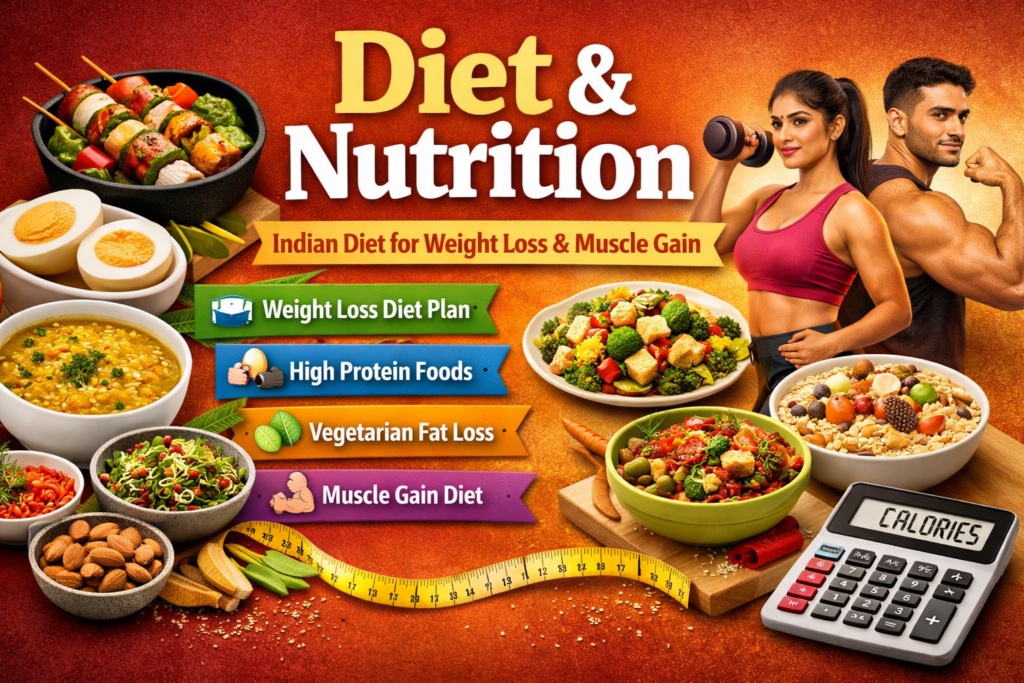
Diet & Nutrition: The Complete Indian Guide to Weight Loss, Fat Loss, and Muscle Gain
Diet & Nutrition is the foundation of every fitness goal. Whether your target is weight loss, fat loss, or muscle gain, your results will depend far more on what you eat than how much you exercise. In India, the biggest problem is not lack of food, but lack of the right nutritional planning. This guide explains how to build an effective Indian diet plan for weight loss, how to maintain a calorie deficit, and how to choose high protein Indian foods for sustainable results.
Understanding Diet & Nutrition in the Indian Context
Indian diets are rich in carbohydrates and often low in quality protein. While roti, rice, and dal form the base of most meals, many people struggle to balance calories, protein, fats, and micronutrients. Proper diet & nutrition is not about extreme restriction, but about intelligent food selection, portion control, and consistency.
For beginners, the goal is simple: eat fewer empty calories, increase protein intake, and create a mild calorie deficit without starving the body.
Calorie Deficit Indian Diet: The Real Key to Weight Loss
Weight loss is not about magic foods. It is about energy balance. If you consume fewer calories than your body burns, you lose weight. This is called a calorie deficit.
An effective calorie deficit Indian diet focuses on:
- Reducing fried and sugar-rich foods
- Controlling portion size of rice and roti
- Increasing vegetables, fruits, and protein
- Avoiding liquid calories like sugary tea, juices, and soft drinks
A realistic calorie deficit is 300–500 calories per day. Anything more aggressive leads to muscle loss, weakness, and rebound weight gain.
Indian Diet Plan for Weight Loss (Simple Structure)
This is a practical daily structure for an Indian diet plan for weight loss that works for most beginners.
Morning (Empty Stomach)
- Warm water with lemon
- Soaked almonds or walnuts (5–6 pieces)
Healthy Breakfast Indian Options
Breakfast must be protein-focused to control hunger for the rest of the day.
- Vegetable omelette with 2 whole eggs
- Paneer bhurji with 1–2 multigrain rotis
- Oats with curd and seeds
- Moong dal chilla with curd
A healthy breakfast Indian style should avoid paratha with butter, deep-fried snacks, and sugary cereals.
Lunch
- 1–2 rotis or small portion of rice
- Dal, rajma, or chole
- Large bowl of vegetables
- Curd or buttermilk
Evening Snack
- Roasted chana
- Sprouts chaat
- Fruit with peanuts
Dinner
- Light meal
- High protein focus
- Minimal carbohydrates
High Protein Indian Foods for Fat Loss and Muscle Gain
Protein is the most important macronutrient for body recomposition. It preserves muscle, increases satiety, and improves metabolism.
Some of the best high protein Indian foods include:
- Eggs
- Paneer (low-fat)
- Chicken breast
- Fish
- Greek yogurt
- Milk and curd
- Soya chunks
- Tofu
Aim for at least 1.2 to 1.6 grams of protein per kilogram of body weight daily.
Vegetarian Protein Sources for Indian Diets
Many Indians follow a vegetarian diet, which makes protein planning more challenging but not impossible.
Best vegetarian protein sources include:
- Paneer
- Tofu
- Tempeh
- Soya chunks
- Lentils and dals
- Chickpeas and kidney beans
- Quinoa
- Peanuts and seeds
Combining multiple vegetarian protein sources improves amino acid quality and absorption.
Fat Loss Diet Vegetarian: What Actually Works
A fat loss diet vegetarian plan must focus on protein density and fiber, not just reducing oil.
Key principles:
- Protein in every meal
- Vegetables in large volume
- Limited ghee, butter, and refined oil
- No liquid calories
- Controlled portion size
Vegetarian fat loss fails when the diet becomes roti-rice dominant with very little protein.
Diet Plan for Beginners Gym
Beginners in the gym make one major mistake: they train hard but eat poorly.
A diet plan for beginners gym must include:
- Pre-workout: Fruit + peanuts or black coffee
- Post-workout: Protein-rich meal within 60 minutes
- Daily protein target met consistently
- Adequate hydration
Without proper diet & nutrition, gym results remain slow and inconsistent.
Muscle Gain Diet Indian Style
Muscle gain requires a slight calorie surplus combined with progressive training.
Muscle gain diet Indian principles:
- High protein intake
- Complex carbohydrates for energy
- Healthy fats in moderation
- Consistent meal timing
Example foods for muscle gain:
- Eggs, chicken, fish
- Paneer, milk, curd
- Rice, oats, potatoes
- Nuts and seeds
Common Mistakes in Indian Diet & Nutrition
Most failures come from these mistakes:
- Skipping meals to lose weight
- Too much rice or roti
- Very low protein intake
- Overuse of oil and ghee
- Depending on supplements instead of food
No supplement can compensate for a poor diet.
Practical Tips for Long-Term Success
- Track calories at least for 2–3 months
- Prioritize protein daily
- Plan meals in advance
- Sleep 7–8 hours per night
- Be consistent for at least 12 weeks
Final Thoughts on Diet & Nutrition
Diet & Nutrition is not about temporary dieting. It is about building a sustainable eating pattern that supports your health, energy, and fitness goals.
Whether you want weight loss, fat loss, or muscle gain, the formula remains simple:
- Control calories
- Increase protein
- Eat whole foods
- Stay consistent
Follow these principles, and your results will come—slowly, steadily, and permanently.