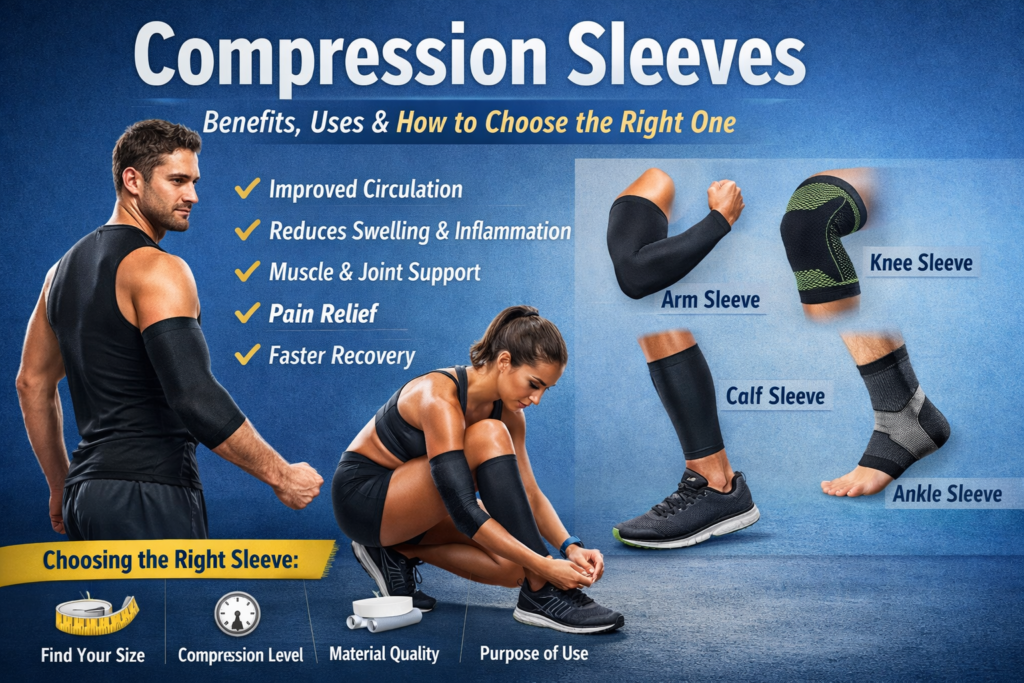
Compression Sleeves: Benefits, Uses, Types, and How to Choose the Right One
Compression sleeves have moved from niche sports gear to everyday wellness essentials. You now see them worn by athletes, office workers, travelers, runners, gym-goers, and even people recovering from injuries or surgeries. The reason is simple: when used correctly, compression sleeves actually work.
They are not magic. They will not turn bad habits into good health. But they do improve blood circulation, reduce swelling, support joints and muscles, and help manage pain and fatigue. If you understand what compression sleeves really do—and how to choose the right type—you can get real benefits instead of wasting money on gimmicks.
This guide explains everything you need to know about compression sleeves: what they are, how they work, their proven benefits, different types, who should use them, and how to choose the right one for your needs.
What Are Compression Sleeves?
Compression sleeves are tight-fitting elastic garments designed to apply controlled pressure to a specific body part. Unlike compression socks or stockings, sleeves usually do not cover the foot or hand. They are commonly worn on the:
- Arms
- Calves
- Knees
- Elbows
- Thighs
- Wrists
- Ankles
The purpose of a compression sleeve is to gently squeeze the muscles and surrounding tissues. This pressure improves venous blood flow, reduces fluid buildup, stabilizes muscles and joints, and provides a mild warming effect.
In short: compression sleeves help your body work more efficiently under stress or during recovery.
How Do Compression Sleeves Work?
The science behind compression sleeves is straightforward and well-established.
When you move, your muscles act like pumps that push blood back toward the heart. But fatigue, injury, long sitting, standing, or intense exercise can slow this process. This causes:
- Blood pooling in the limbs
- Swelling and inflammation
- Muscle soreness
- Heaviness and fatigue
Compression sleeves apply external pressure that narrows blood vessels slightly. This increases blood flow velocity and improves venous return. As a result:
- Oxygen reaches muscles faster
- Waste products like lactic acid are removed more efficiently
- Swelling is reduced
- Muscle vibration and micro-trauma decrease
This is why compression sleeves are widely used both for performance and recovery.
Key Benefits of Compression Sleeves
1. Improved Blood Circulation
The main benefit of compression sleeves is better circulation. Enhanced blood flow helps deliver oxygen and nutrients to muscles while flushing out metabolic waste.
This leads to:
- Reduced fatigue
- Faster recovery
- Less muscle soreness
2. Reduced Swelling and Inflammation
Compression sleeves limit fluid accumulation in tissues. This is especially helpful for:
- People who stand or sit for long hours
- Travelers on long flights
- Post-workout recovery
- Injury or surgery recovery
3. Muscle Support and Stability
Compression sleeves provide light structural support. They reduce excessive muscle movement and vibration during activity.
This can:
- Lower the risk of muscle strain
- Improve joint awareness (proprioception)
- Enhance movement control
4. Pain Relief
Many people use compression sleeves to manage chronic or acute pain. Common conditions include:
- Arthritis
- Tendonitis
- Shin splints
- Runner’s knee
- Tennis elbow
- Plantar fasciitis
While compression sleeves do not cure these conditions, they often reduce discomfort enough to allow normal movement and activity.
5. Faster Recovery After Exercise
Wearing compression sleeves after workouts improves recovery speed by improving circulation and reducing inflammation.
Many athletes wear them:
- After long runs
- After intense gym sessions
- During sleep post-training
Types of Compression Sleeves
Arm Compression Sleeves
Common in basketball, volleyball, and endurance sports. Benefits include improved circulation, muscle warmth, and protection against minor abrasions.
Calf Compression Sleeves
Popular among runners and walkers. They help reduce calf fatigue, shin splints, and swelling.
Knee Compression Sleeves
Used for joint stability and pain management. Helpful for arthritis, meniscus issues, and general knee soreness.
Elbow Compression Sleeves
Often used for tennis elbow, golfer’s elbow, and lifting support.
Ankle Compression Sleeves
Provide support for mild sprains, plantar fasciitis, and swelling control.
Thigh and Wrist Sleeves
Less common but useful for localized support and injury recovery.
Who Should Use Compression Sleeves?
Compression sleeves are useful for a wide range of people, not just athletes.
Athletes and Fitness Enthusiasts
- Runners
- Weightlifters
- Cross-training athletes
- Team sport players
Office Workers and Drivers
People who sit for long hours benefit from improved circulation and reduced swelling.
Travelers
Long flights and road trips increase the risk of swelling and circulation issues. Compression sleeves reduce discomfort and stiffness.
People With Joint or Muscle Pain
Those with arthritis, tendonitis, or chronic pain often find compression sleeves helpful.
Post-Surgery or Injury Recovery
Doctors frequently recommend compression garments to control swelling and improve healing.
How to Choose the Right Compression Sleeves
1. Correct Size
Size matters more than brand. Too tight can restrict circulation. Too loose does nothing.
Always measure the body part as instructed by the manufacturer and follow their size chart.
2. Compression Level
- Light (10–15 mmHg): Daily wear, travel, mild swelling
- Moderate (15–20 mmHg): Exercise, recovery, mild pain
- Firm (20–30 mmHg): Medical use, serious swelling, injury recovery
3. Material Quality
Look for breathable, moisture-wicking fabrics with good elasticity and durability.
4. Purpose of Use
- For sports → flexible and breathable
- For pain or recovery → firmer compression
- For daily wear → comfort-focused design
How Long Should You Wear Compression Sleeves?
This depends on your purpose.
- During workouts: Entire session
- After workouts: 1–4 hours
- Daily wear: Up to 8–10 hours
- Travel: Entire duration of travel
Do not sleep in compression sleeves unless advised by a medical professional.
Common Myths About Compression Sleeves
Myth 1: Tighter Is Always Better
False. Excessive compression can restrict blood flow and cause numbness.
Myth 2: Compression Sleeves Cure Injuries
They do not. They support recovery, but they are not a substitute for proper treatment.
Myth 3: Only Athletes Need Them
Wrong. Office workers, travelers, and people with joint pain benefit just as much.
Potential Risks and Who Should Avoid Them
Compression sleeves are generally safe, but some people should consult a doctor first:
- People with peripheral artery disease
- People with severe circulatory disorders
- People with skin infections or open wounds
- Diabetics with nerve damage
If you feel numbness, tingling, pain, or discoloration, remove the sleeve immediately.
Final Thoughts on Compression Sleeves
Compression sleeves are not hype. They are simple tools that deliver measurable benefits when used correctly.
They improve circulation, reduce swelling, support muscles and joints, relieve pain, and accelerate recovery. They are affordable, low-risk, and easy to use.
But they are not a replacement for proper training, mobility work, rest, or medical care. Use them as part of a broader health and recovery strategy.
If you choose the right size, compression level, and purpose-built design, compression sleeves can become one of the most practical and cost-effective wellness tools in your daily routine.