Foam Roller: The Simple Recovery Tool That Actually Works
If you work out even semi-regularly, you’ve probably seen a foam roller lying around in gyms or fitness videos. Most people either ignore it or use it randomly for 30 seconds and quit. That’s a mistake. When used correctly, a foam roller can improve recovery, reduce muscle tightness, increase mobility, and even enhance workout performance.
This isn’t fitness hype. Foam rolling is one of the few low-cost recovery tools that has real, practical value. But only if you understand what it does and how to use it properly.
What Is a Foam Roller?
A foam roller is a cylindrical tool made from dense foam or hard plastic. It’s used for a technique called self-myofascial release — a fancy term for applying pressure to tight muscles and connective tissue.
In simple words: you place your body weight on the roller and slowly roll over tight or sore areas to release tension and improve blood flow.
What Does a Foam Roller Actually Do?
Let’s cut through the myths.
- It does not break down muscle knots like a massage therapist.
- It does not magically “detox” muscles.
What it does do:
- Improves short-term flexibility
- Reduces muscle stiffness
- Increases blood circulation to worked muscles
- Helps calm the nervous system after training
- Reduces post-workout soreness for many people
That alone makes a foam roller worth using.
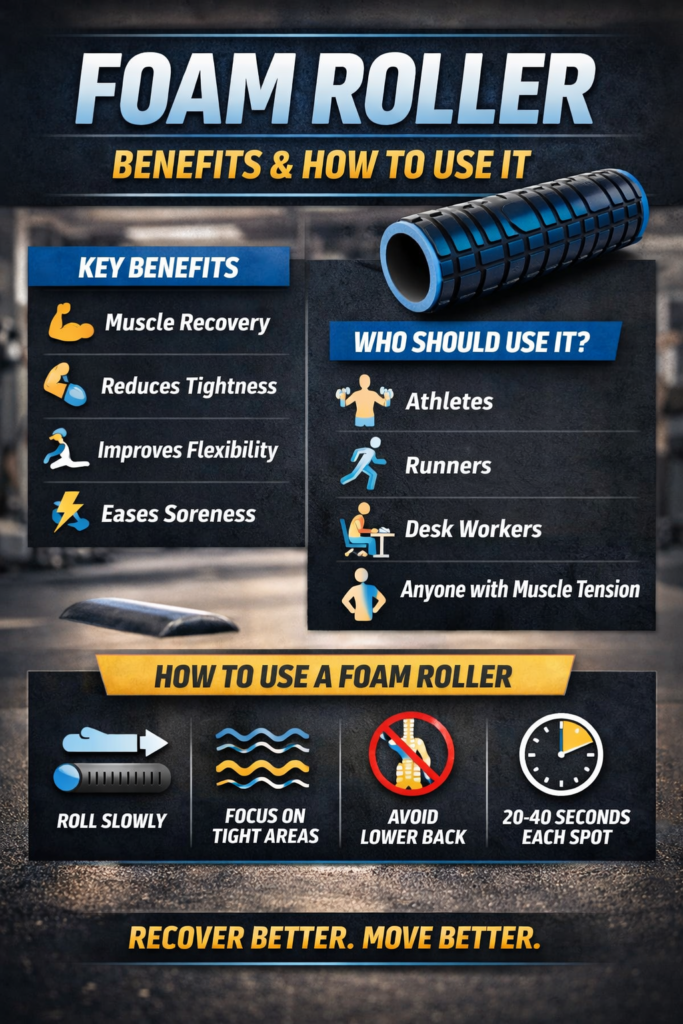
Key Benefits of Using a Foam Roller
1. Faster Muscle Recovery
After intense training, muscles become tight and inflamed. Foam rolling increases blood flow and helps muscles relax faster. You may still feel sore, but recovery time is often shorter.
2. Reduced Muscle Tightness
If your quads, hamstrings, calves, or back always feel tight, a foam roller can significantly reduce that stiffness within minutes.
3. Improved Mobility and Range of Motion
Regular foam rolling improves how freely your joints move. This directly helps squats, deadlifts, overhead presses, and running form.
4. Better Workout Performance
Looser muscles = better movement quality. Foam rolling before training can temporarily improve flexibility and reduce injury risk.
5. Lower Risk of Overuse Injuries
When muscles stay tight for weeks, tendons and joints take extra stress. Foam rolling helps reduce that long-term tension.
Who Should Use a Foam Roller?
Short answer: almost everyone.
- Gym-goers and bodybuilders
- Runners and cyclists
- People with desk jobs
- Anyone with chronic tight muscles
- Beginners starting fitness
If you move your body at all, you can benefit from a foam roller.
Types of Foam Rollers
1. Soft Foam Roller
Best for beginners and people with very sensitive muscles. Less painful but also less effective for deep tissue work.
2. Medium-Density Foam Roller
The best all-round option. Provides enough pressure without being brutal.
3. High-Density Foam Roller
For experienced users. Delivers deeper pressure but can be uncomfortable.
4. Textured Foam Roller
Has ridges or knobs to mimic massage thumbs. Feels intense and isn’t necessary for most people.
How to Use a Foam Roller Properly
This is where most people mess up.
Basic Rules
- Roll slowly — about 1 inch per second
- Breathe deeply
- Stop on tight spots for 20–40 seconds
- Do not roll directly over joints or lower back spine
- Mild discomfort is okay. Sharp pain is not.
Common Areas to Roll
- Quadriceps (front thighs)
- Hamstrings (back thighs)
- Calves
- Glutes
- Upper back (thoracic spine)
- Lats
Foam Rolling Before vs After Workout
Before Workout
Use light pressure for 5–8 minutes. Focus on improving mobility, not deep pain. This prepares muscles for movement.
After Workout
Use moderate pressure for 10–15 minutes. Focus on sore and tight areas. This helps recovery.
How Often Should You Use a Foam Roller?
- After workouts: 3–5x per week
- On rest days: optional but beneficial
- For tight areas: daily is fine
Consistency matters more than intensity.
Common Mistakes People Make
- Rolling too fast
- Using excessive pain
- Ignoring breathing
- Only rolling when sore
- Expecting instant permanent results
Foam rolling works best as a habit, not a one-time fix.
Does Science Support Foam Rolling?
Yes — but with realistic expectations.
Studies show foam rolling improves short-term flexibility and reduces perceived muscle soreness. It does not permanently change muscle structure or eliminate injuries by itself.
In short: it’s useful, but it’s not magic.
Is Foam Rolling Safe?
For most people, yes.
Avoid foam rolling if you have:
- Recent fractures
- Blood clotting disorders
- Severe osteoporosis
- Open wounds or infections
If unsure, consult a physiotherapist.
Foam Roller vs Massage Gun
Massage guns look cool, but they’re expensive and not necessary.
| Foam Roller | Massage Gun |
|---|---|
| Cheap | Expensive |
| Manual control | Electric |
| Great for large muscles | Good for targeted spots |
| Portable | Needs charging |
If you had to choose only one: choose the foam roller.
How to Choose the Best Foam Roller
- Beginners: medium-density smooth roller
- Advanced: high-density smooth roller
- Length: 18–24 inches is ideal
- Avoid gimmicky textures unless you know what you’re doing
Final Verdict: Is a Foam Roller Worth It?
Yes. Absolutely.
A foam roller is one of the most cost-effective tools you can buy for recovery, flexibility, and long-term joint health. It won’t replace good training, sleep, or nutrition — but it enhances all of them.
If you train hard, sit long hours, or constantly feel tight, you should already own one.
Stop overthinking it. Buy a simple medium-density foam roller and use it consistently.
That’s it. No hype. Just results.