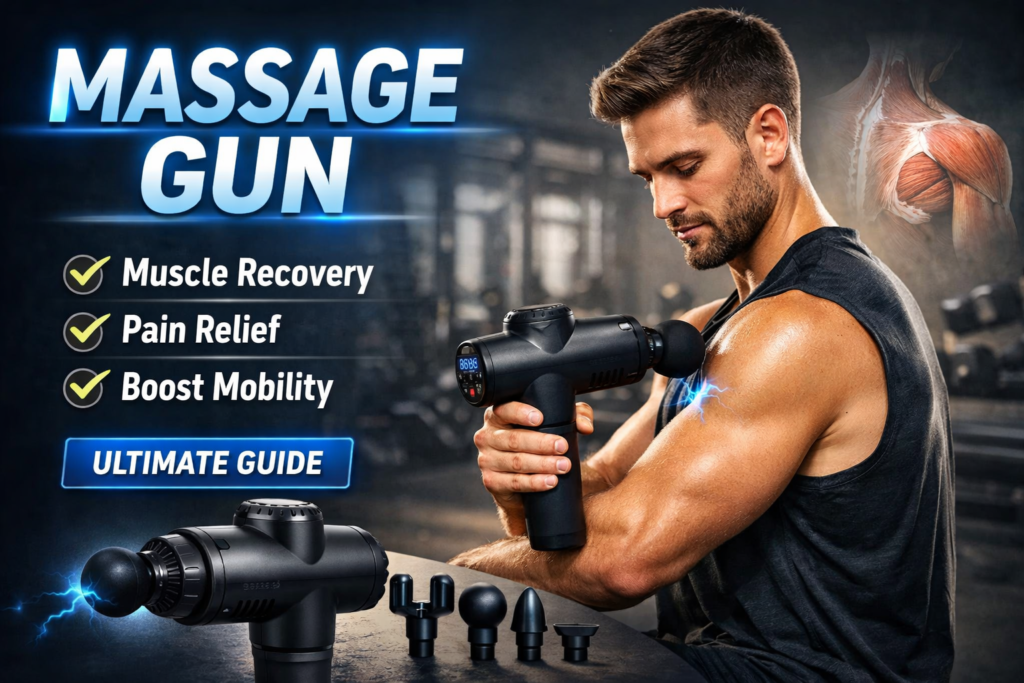
Massage Gun: The Ultimate Guide to Faster Muscle Recovery and Pain Relief
If you have ever finished a tough workout and felt sore, stiff, or exhausted, you already understand why the massage gun has become one of the most popular fitness and recovery tools in the world. Once limited to professional athletes and physical therapists, massage guns are now used by everyday people who want faster muscle recovery, pain relief, and better mobility.
In this complete guide, you will learn what a massage gun is, how it works, its real benefits, how to use it safely, and how to choose the best massage gun for your needs.
What Is a Massage Gun?
A massage gun, also known as a percussion massager, is a handheld electric device designed to deliver rapid pulses of pressure deep into muscle tissue. These pulses stimulate blood flow, loosen tight muscles, and reduce soreness.
Unlike traditional massages that rely on slow kneading, a massage gun uses high-frequency vibrations and percussion therapy to target muscle knots and trigger points more efficiently.
Most massage guns come with multiple interchangeable heads and adjustable speed levels, making them suitable for different muscle groups and recovery goals.
How Does a Massage Gun Work?
The core technology behind a massage gun is percussive therapy. The motor inside the device drives the massage head forward and backward at high speed, delivering short bursts of pressure into the muscle.
This action:
- Increases blood circulation
- Breaks up muscle adhesions and knots
- Improves lymphatic drainage
- Reduces muscle stiffness
- Promotes faster tissue repair
The result is a sensation similar to deep tissue massage, but more targeted and controllable.
Benefits of Using a Massage Gun
Using a massage gun regularly offers a wide range of physical and mental benefits. Below are the most important ones.
1. Faster Muscle Recovery
After intense exercise, micro-tears occur in muscle fibers. A massage gun increases blood flow to these areas, delivering oxygen and nutrients that speed up healing.
2. Reduced Muscle Soreness (DOMS)
Delayed Onset Muscle Soreness (DOMS) can last 24–72 hours. Percussive therapy helps reduce this soreness significantly when used post-workout.
3. Pain Relief
Massage guns help release tight muscles and reduce inflammation, making them useful for chronic pain, back pain, neck stiffness, and joint discomfort.
4. Improved Range of Motion
Loosening tight fascia and muscles improves flexibility and joint mobility, which helps with posture and performance.
5. Stress Reduction
Deep muscle stimulation triggers the parasympathetic nervous system, helping the body relax and lowering stress levels.
Who Should Use a Massage Gun?
A massage gun is not just for gym lovers. It is beneficial for:
- Athletes and bodybuilders
- Runners and cyclists
- Office workers with neck and back pain
- Elderly people with joint stiffness
- People recovering from injuries (with medical advice)
- Anyone dealing with daily muscle tension
How to Use a Massage Gun Properly
Using a massage gun correctly is crucial for safety and effectiveness.
Step-by-Step Guide
- Choose the right massage head for the muscle group.
- Start on the lowest speed setting.
- Gently place the massage gun on the muscle.
- Move slowly over the area for 30–60 seconds.
- Increase intensity only if comfortable.
Best Practice Tips
- Do not use on bones, joints, or the spine.
- Avoid injured or inflamed areas.
- Limit each muscle group to 1–2 minutes.
- Drink water after using the massage gun.
Massage Gun vs Traditional Massage
| Feature | Massage Gun | Traditional Massage |
|---|---|---|
| Cost | One-time purchase | Recurring expense |
| Convenience | Anytime, anywhere | Appointment needed |
| Targeted Therapy | High | Moderate |
| Customization | Multiple heads and speeds | Depends on therapist |
While both are effective, a massage gun offers unmatched convenience and long-term cost savings.
Different Massage Gun Attachments and Their Uses
- Ball Head: General muscle groups like thighs, calves, arms.
- Fork Head: Spine, neck, and Achilles tendon.
- Bullet Head: Trigger points and deep knots.
- Flat Head: Large surface muscles like chest and back.
- Air Cushion Head: Sensitive areas and joints.
How to Choose the Best Massage Gun
Not all massage guns are equal. Here is what actually matters:
1. Motor Power
Look for at least 1,800–3,200 percussions per minute.
2. Battery Life
A good massage gun should last 3–6 hours per charge.
3. Noise Level
Quiet operation (under 60 dB) is ideal for home use.
4. Speed Settings
Multiple levels allow better control and comfort.
5. Attachments
More attachments = more versatility.
Common Mistakes People Make With Massage Guns
- Using too much pressure
- Spending too long on one spot
- Using on injured areas
- Ignoring pain signals
- Skipping warm-up and hydration
These mistakes reduce benefits and increase injury risk.
Are Massage Guns Safe?
Yes, massage guns are generally safe when used correctly. However, people with the following conditions should consult a doctor first:
- Blood clot disorders
- Recent surgery
- Severe osteoporosis
- Pregnancy
- Chronic nerve damage
How Often Should You Use a Massage Gun?
For general recovery, 1–2 times per day is sufficient. Athletes may use it before workouts for warm-up and after workouts for recovery.
Each muscle group should not exceed 2 minutes per session.
Final Thoughts: Is a Massage Gun Worth It?
If you care about muscle recovery, pain relief, and mobility, a massage gun is absolutely worth the investment. It offers professional-level therapy at home, saves time and money, and delivers real physical benefits.
Whether you are an athlete, a fitness beginner, or someone dealing with daily muscle tension, adding a massage gun to your routine can dramatically improve your quality of life.
Choose the right model, use it properly, and make recovery a daily habit.
Focus Keyword: Massage Gun
Related Keywords: Percussion Massager, Muscle Recovery Tool, Deep Tissue Massage Gun, Portable Massager