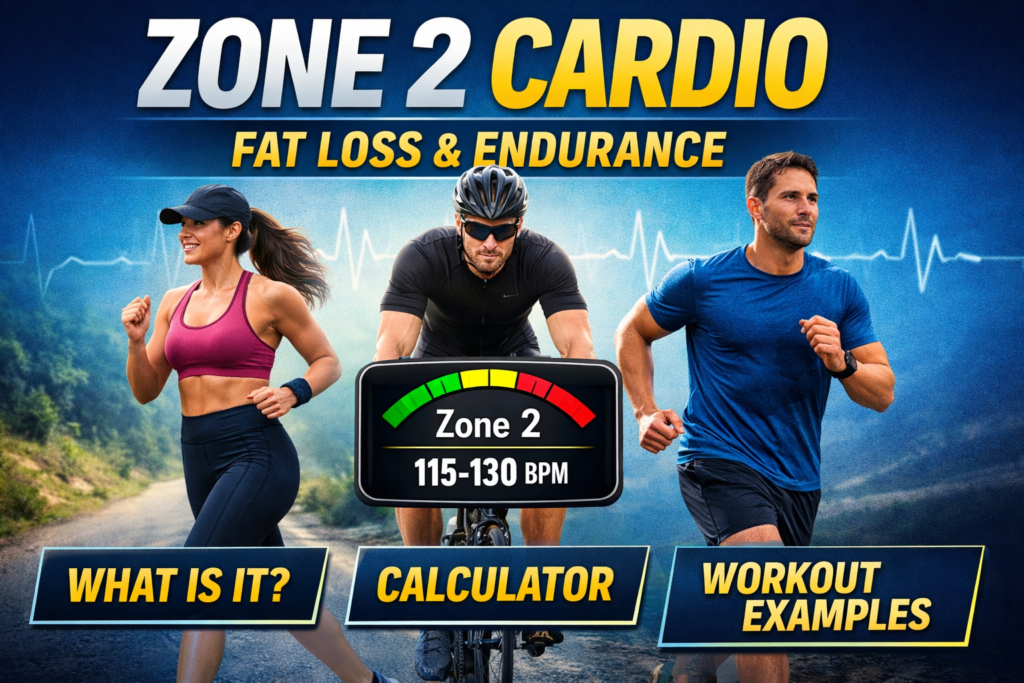
Zone 2 Cardio: The Complete Guide to Fat Loss, Endurance, and Long-Term Fitness
In recent years, zone 2 cardio has gone from an obscure endurance-training concept to one of the most talked-about strategies in fitness and fat loss. Elite athletes, biohackers, and everyday gym-goers are all using it for better heart health, improved stamina, and sustainable weight management.
But what exactly is zone 2 cardio? Why does it work so well? And how do you know if you’re actually training in the right heart-rate zone?
This guide answers all of that clearly and practically. You’ll learn what is zone 2 cardio, how to calculate it, real-world zone 2 cardio examples, and how to build it into your weekly routine without wasting time.
What Is Zone 2 Cardio?
What is zone 2 cardio? In simple terms, zone 2 cardio refers to aerobic exercise performed at a low to moderate intensity where your body primarily burns fat for fuel instead of carbohydrates.
It is based on heart-rate zones, which are typically divided into five levels:
- Zone 1: Very light activity (warm-up, walking)
- Zone 2: Light to moderate aerobic effort (fat-burning zone)
- Zone 3: Moderate intensity (tempo pace)
- Zone 4: High intensity (threshold training)
- Zone 5: Maximum effort (sprints, HIIT)
Zone 2 usually falls between 60–70% of your maximum heart rate. At this intensity:
- You can hold a conversation without gasping.
- Your breathing is steady but slightly elevated.
- You feel like you could maintain the pace for a long time.
This is why zone 2 cardio is often called the aerobic base zone.
Why Zone 2 Cardio Works So Well
Most people train either too easy or too hard. Zone 2 cardio sits in the optimal middle ground that delivers multiple benefits with minimal recovery cost.
1. Maximizes Fat Burning
At zone 2 intensity, your body relies heavily on fat oxidation. That makes it ideal for people aiming for weight loss without destroying their energy levels.
2. Improves Mitochondrial Function
Zone 2 cardio stimulates mitochondrial growth and efficiency. This improves your body’s ability to produce energy and delays fatigue.
3. Builds Aerobic Endurance
It strengthens your cardiovascular system and increases stroke volume (how much blood your heart pumps per beat).
4. Low Stress, High Return
Unlike HIIT, zone 2 training produces minimal cortisol spikes and doesn’t overload your nervous system.
Zone 2 Cardio Calculator: How to Find Your Zone
To get real results, you must stay inside your zone 2 range. Guessing does not work.
Simple Formula
Use this basic method to estimate your zone 2 range:
Maximum Heart Rate (MHR) = 220 − your age
Zone 2 Range = 60%–70% of MHR
Example:
If you are 40 years old:
- MHR = 220 − 40 = 180 bpm
- 60% of 180 = 108 bpm
- 70% of 180 = 126 bpm
Your zone 2 range = 108–126 bpm
This is your basic zone 2 cardio calculator.
More Accurate Methods
- VO2 max testing
- Lactate threshold testing
- Heart-rate variability data
If you want precision, a chest strap heart-rate monitor is far superior to wrist trackers.
How to Tell If You’re in Zone 2 Without a Monitor
If you don’t have a heart-rate monitor, use these indicators:
- You can speak full sentences comfortably.
- Your breathing is deeper but controlled.
- You are sweating lightly.
- You feel like you could go for 45–90 minutes.
If you are panting or silent, you are above zone 2.
Best Zone 2 Cardio Examples
Here are practical zone 2 cardio examples you can start today:
1. Brisk Walking
Uphill treadmill walking or fast outdoor walking is one of the easiest ways to stay in zone 2.
2. Cycling
Outdoor cycling or stationary bikes allow precise intensity control.
3. Jogging
Very slow jogging works for people with a strong aerobic base.
4. Rowing Machine
Low stroke rate, steady pace rowing is excellent zone 2 cardio.
5. Elliptical Trainer
Low-impact and heart-rate friendly.
6. Swimming
Slow continuous laps work well for experienced swimmers.
How Long and How Often Should You Do Zone 2 Cardio?
Beginners
- 20–30 minutes
- 3–4 times per week
Intermediate
- 30–60 minutes
- 4–5 times per week
Advanced
- 60–90 minutes
- 5–6 times per week
Consistency matters more than duration.
Zone 2 Cardio vs HIIT
| Feature | Zone 2 Cardio | HIIT |
|---|---|---|
| Fat Burning | High | Moderate |
| Recovery Cost | Low | High |
| Sustainability | Excellent | Limited |
| Injury Risk | Low | High |
HIIT has its place. But for long-term fat loss and heart health, zone 2 cardio is superior.
Common Mistakes People Make
- Training too hard and drifting into zone 3 or 4
- Not using a heart-rate monitor
- Doing sessions too short to create adaptation
- Skipping strength training completely
Who Should Use Zone 2 Cardio?
- Beginners building aerobic fitness
- Overweight individuals seeking fat loss
- Endurance athletes
- People recovering from burnout
- Anyone who hates brutal workouts
Final Thoughts
Zone 2 cardio is not trendy nonsense. It is one of the most scientifically supported training methods for fat loss, heart health, and long-term endurance.
Once you understand what is zone 2 cardio, use a proper zone 2 cardio calculator, and apply real-world zone 2 cardio examples, you unlock a simple system that actually works.
If your goal is sustainable fitness instead of constant exhaustion, zone 2 cardio should be your foundation.